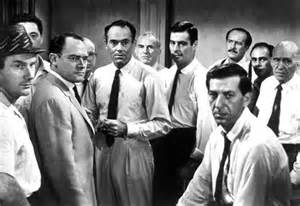
 Twelve Angry Men tells the story of a jury’s deliberations during the trial of a young man who is accused of murdering his father. The jury must reach a unanimous decision and if they vote guilty, the young man will get the death penalty. During the initial straw vote, eleven of the jurors vote, “guilty,” and it seems that the discussion will be short. But Juror #8, played by Henry Fonda, votes, “not guilty,” and then the drama begins as the jurors question each other, themselves and the evidence.
This 1957 drama, directed by Sidney Lumet, was nominated for Best Picture and starred some of the greatest actors of that era. In addition to its value as a text for a discussion of justice, the jury system, leadership, and group decision making, the 96-minute film is a fascinating resource for directing students because most of the action takes place in the confines of the jury room and Lumet does a masterful job of moving his actors and camera.
Watching a black and white film about a jury of twelve white men seems anachronistic in our more modern and diverse era, but the messages are universal and students of leadership can benefit from a close examination of these jurors and this jury room. Read Roger Ebert’s review of this classic film at Twelve Angry Men. 1957. 96 minutes.

 REELLEADERSBLOG