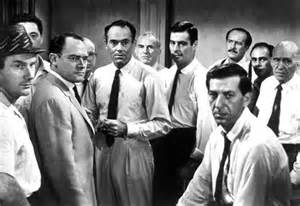
Twelve Angry Men

Twelve Angry Men tells the story of a jury’s deliberations during the trial of a young man who is accused of murdering his father. The jury must reach a unanimous decision and if they vote guilty, the young man will get the death penalty. During the initial straw vote, eleven of the jurors vote, “guilty,” and it seems that the discussion will be short. But Juror #8, played by Henry Fonda, votes, “not guilty,” and then the drama begins as the jurors question each other, themselves and the evidence.

This 1957 drama, directed by Sidney Lumet, was nominated for Best Picture and starred some of the greatest actors of that era. In addition to its value as a text for a discussion of justice, the jury system, leadership, and group decision making, the 96-minute film is a fascinating resource for directing students because most of the action takes place in the confines of the jury room and Lumet does a masterful job of moving his actors and camera.

Watching a black and white film about a jury of twelve white men seems anachronistic in our more modern and diverse era, but the messages are universal and students of leadership can benefit from a close examination of these jurors and this jury room. Read Roger Ebert’s review of this classic film at Twelve Angry Men. 1957. 96 minutes.
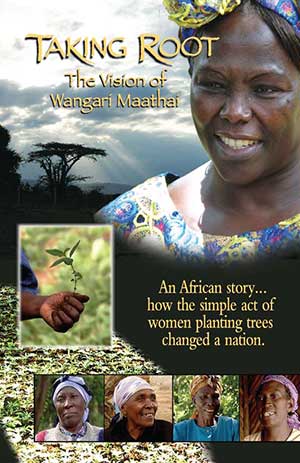
Taking Root: The Vision of Wangari Maathai

TakingRootIn 1977, Wangari Maathai was a professor in Kenya when she launched a campaign, the Green Belt Movement, to safeguard the environment and promote human rights by organizing women to plant trees throughout the country. In subsequent years, she led a hunger strike to free political prisoners, prodded the dictator of 24 years to hold elections, organized seminars to train Kenyans in governance and civil society, and was elected to Parliament with 98 percent of the vote. In 2004 she was awarded the Nobel Peace Price. To date, the Green Belt Movement has planted more than 35 million trees. “People in forestry didn’t understand what we were doing. They said to plant a tree, you need a diploma. I don’t think you need a diploma to plant a tree.” “The movement started with planting trees, but it’s more than the planting of trees, it’s planting ideas.” 2008, 60 minutes.

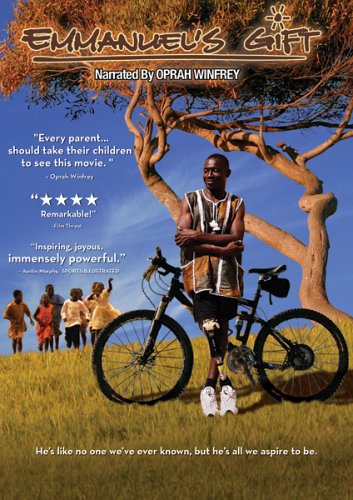
Emmanuel’s Gift

Emmanuels GiftEmmanuel Ofosue Yeboah, an orphan with a severely deformed right leg, who earns $2 per day shining shoes, writes a letter to the Challenged Athletes Foundation asking for a bicycle so that he can bike across Ghana to demonstrate that disabled people do not have to be beggars, that they can make a valuable contribution to society. After his successful ride across the country and a trip to California where he receives a prosthesis for his leg, Emmanuel returns to Ghana to build a national disabled sports team, distribute wheelchairs to the disabled, set up a scholarship program to send kids to school, and lead a political movement to advance the rights of the disabled. “I want to spread a message about how to change perceptions and the only way is to lead by example.” 2005, 80 minutes.

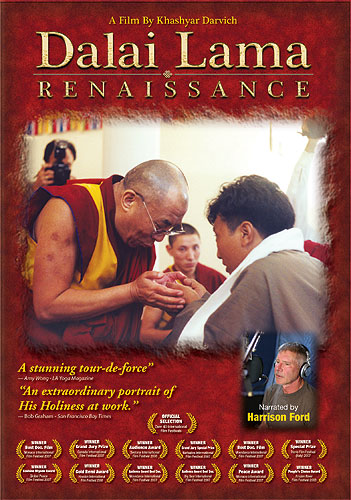
Dalai Lama Renaissance

DalaiLamaRenaissanceBrother Wayne Teasdale and others encourage the Dalai Lama to invite forty innovative thinkers to Dharmsala to discuss and solve the world’s problems. The participants are on a pilgrimage to meet the Dalai Lama and to transform the world, but as their egos emerge, they vie for his attention and rebel against the structure of the process. Will they decide to defend Tibet by boycotting Chinese products, will they make a plan to rescue the world’s disenfranchised people, or will they decide to address their own Tibets? “There’s a world you can transform in a nanosecond: yourself,” says quantum physicist Fred Alan Wolf. 2009, 82 minutes.

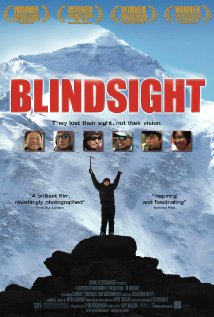
Blindsight

BlindsightSabriye Tenberken, blind since age 12, invites Erik Weihenmayer, the first blind person to scale Mt. Everest, to lead six blind Tibetan teenagers on a climbing expedition in order to transform their views of themselves and views about blindness in Tibet. In their culture, people believe that blindness results from demonic possession or crimes committed in a past life. Conflict ensues as they approach their goal, a 23,000 ft. peak, and it appears that some of the teens will not be able to make it to the top. Should they have a victory and a celebration for all or a victory for some? “Their challenge is adventure,” Sabriye says of Erik and the climbing experts, “Our challenge is to get the children to see that they are equal.” 2006, 104 minutes.

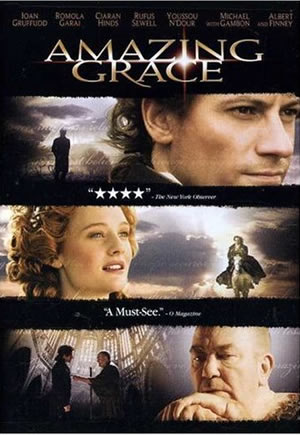
Amazing Grace

AmazingGraceAmazing Grace: William Wilberforce, an exceptional speaker and strategist, was for many years virtually the sole voice for abolition of slavery against 300 other members of the British Parliament in the 18th Century. During the time of this story, we see him fighting for abolition by building relationships, staging dramatic confrontations, and strategically using political power. This historical drama, based on a true story and directed by Michael Apted (Coal Miner’s Daughter), also features John Newton, Wilberforce’s minister, the former captain of a slave ship who repented of his sins and wrote the hymn, Amazing Grace. During his lifetime, Wilberforce launched more than 65 social initiatives addressing issues such as child labor protection, animal welfare, and the national gallery of art.  “God has set before me two great tasks: abolition of the slave trade and reformation of society.” 2007, 118 minutes.